
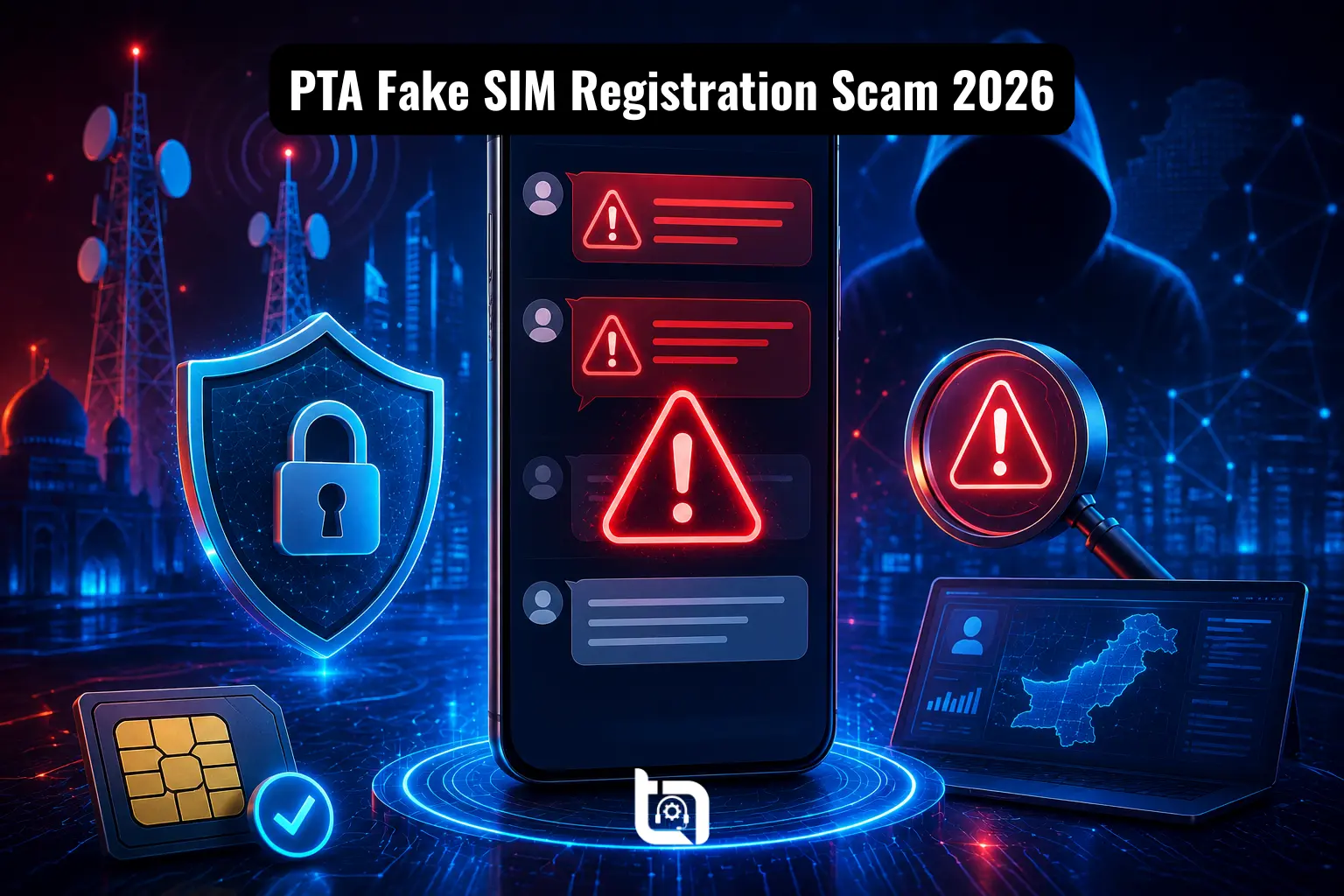
The rise of digital communication in Pakistan has also increased the number of online scams targeting mobile users. One of the most dangerous fraud trends in 2026 involves fake SIM registration and PTA verification messages. Thousands of users across Pakistan receive fraudulent SMS messages or calls claiming that their SIM cards will be blocked unless they immediately verify personal information or pay certain charges. In this guide, we explain how PTA fake SIM registration scam works, how to identify suspicious messages, and the safest ways to protect yourself from fraud in 2026.
Scammers often misuse the name of Pakistan Telecommunication Authority (PTA) and create panic among users by pretending to represent official telecom authorities. These fake messages are designed to steal personal information, banking details, mobile wallet access, or one-time passwords (OTPs). Unfortunately, many users still fall victim to these scams due to lack of awareness.
What Is the PTA Fake SIM Registration Scam?
The PTA fake SIM registration scam is a fraudulent scheme where scammers pretend to be representatives of PTA or mobile network operators. They usually send alarming SMS messages claiming:
- Your SIM is unverified
- Your SIM will be blocked soon
- Your biometric verification has expired
- Your mobile number is involved in illegal activity
- Immediate action is required
The main goal of these scams is to create fear and urgency so users quickly respond without verifying authenticity. These tactics are becoming increasingly sophisticated in Pakistan. In many cases, scammers ask victims to:
- Share CNIC information
- Send OTP codes
- Click malicious links
- Call fake helpline numbers
- Transfer money through mobile wallets
Why These Scams Are Increasing in 2026
Pakistan’s growing digital economy and increasing smartphone usage have created more opportunities for cybercriminals. Mobile banking, digital wallets, online shopping, and app-based services now depend heavily on mobile numbers.
Scammers understand that users become nervous when messages mention SIM blocking or PTA verification problems. Many people fear losing access to banking apps, WhatsApp accounts, and important contacts linked with their mobile numbers. As a result, fake telecom-related scams continue spreading rapidly through SMS, WhatsApp, and phone calls.
Cybercriminals also exploit other factors of cyber environment in Pakistan such as lack of digital awareness, weak cybersecurity habits, fake caller ID technology, and social engineering techniques.
Staying alert and informed can protect users from major financial and privacy risks in 2026.
Common Signs of Fake PTA Messages
Many fraudulent messages follow similar patterns that users can identify easily with careful attention. Some of those are listed below for public awareness.
Suspicious Urgent Language
Scam messages usually create panic by using urgent wording while official authorities rarely use threatening language in this way. The scammers may include suspicious phrases such as:
- “Your SIM will be blocked today”
- “Immediate verification required”
- “Final warning from PTA”
- “Your number will be suspended within hours”
Unknown or Personal Mobile Numbers
Real PTA notifications do not normally come from random personal mobile numbers. Users should stay cautious if a message claims to be from PTA but does not originate from an official channel. Fraud messages often arrive from:
- Standard mobile numbers
- Unknown international numbers
- Fake sender IDs
Requests for OTP or Personal Information
PTA and telecom operators never ask users to share confidential OTPs through SMS or phone calls. Therefore, one of the biggest warning signs is any request for:
- OTP codes
- ATM PINs
- Banking passwords
- Mobile wallet verification codes
Fake Links and Websites
Scammers frequently include suspicious links pretending to be official verification portals. Users should never click unknown verification links received through SMS. These fake websites may:
- Steal login information
- Install malware
- Collect CNIC details
- Access banking credentials
How to Verify SIM Status Safely
Instead of responding to suspicious messages, users should always verify SIM information through official channels only.
- Never trust links sent by unknown numbers. Users can verify SIM details through official PTA website, official telecom operator apps, and verified customer support numbers.
- If you receive a suspicious message, contact your mobile network’s official helpline directly and confirm whether any issue actually exists with your SIM registration.
- Official verification should only happen through authorized telecom channels. Never share personal information with random callers, unverified agents, social media pages, or WhatsApp verification groups
Tips to Stay Safe From Telecom Fraud
Cybersecurity habits are becoming increasingly important in everyday digital life. Digital awareness remains the strongest defense against online scams not only in Pakistan but around the globe. Users should:
- Never share OTP codes
- Avoid clicking suspicious links
- Verify information through official sources
- Ignore panic-based SMS messages
- Keep smartphones updated
- Use strong account passwords
Final Thoughts
PTA fake SIM registration scam is becoming more common in Pakistan as cybercriminals continue targeting smartphone users through fear and deception. These fraud messages are designed to steal personal data, banking information, and account access by pretending to represent official telecom authorities.
The safest approach is simple: never trust urgent verification requests received through random SMS messages or unknown calls. Always verify SIM information directly through official PTA and telecom operator channels.
Stay connected with Tecno Times Pakistan for the latest cybersecurity alerts, PTA updates, telecom news, smartphone safety guides, and digital awareness content across Pakistan.