

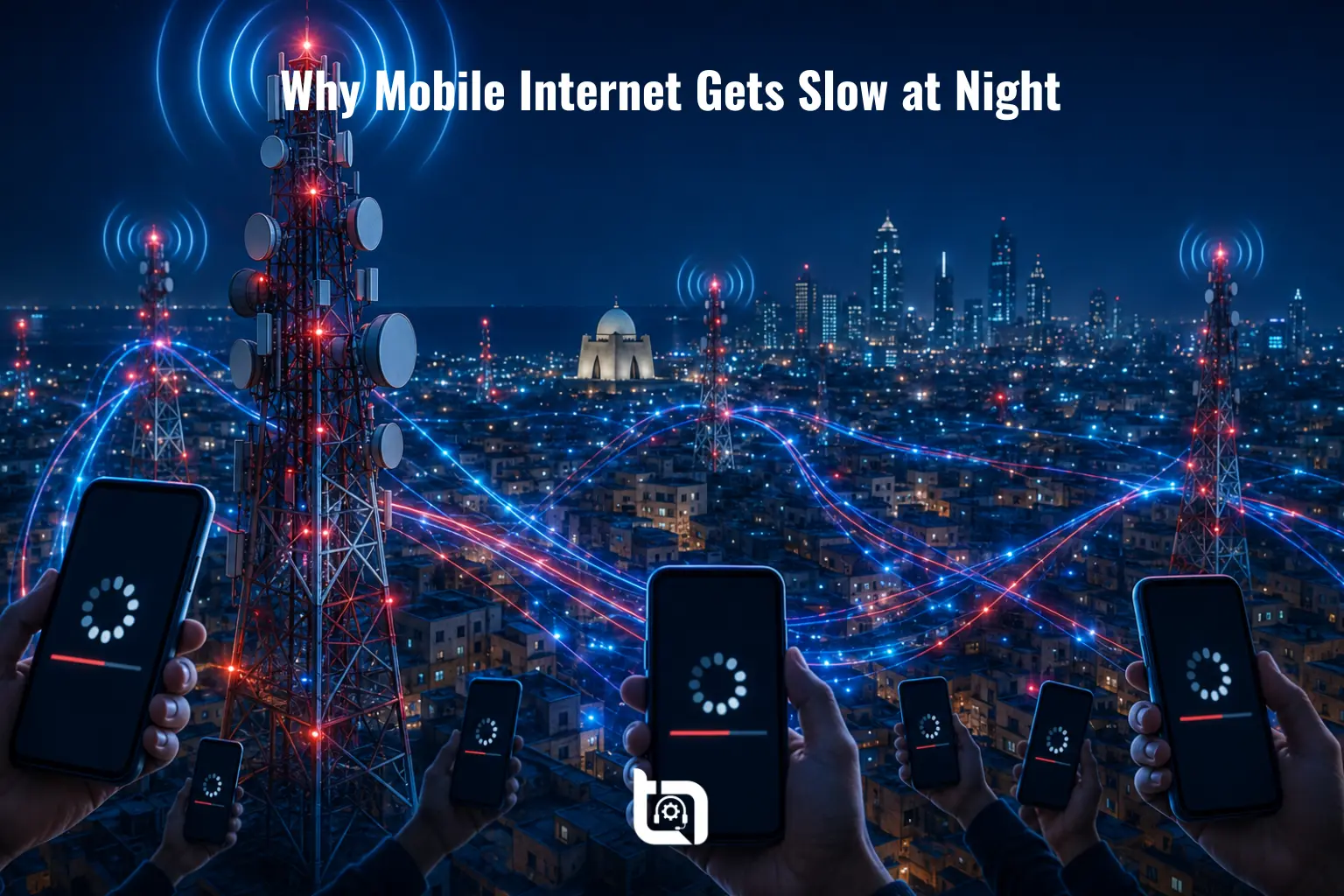
Many internet users in Pakistan notice that mobile internet speeds become frustratingly slow during the evening and nighttime hours. Videos start buffering, online games lag badly, WhatsApp downloads slow down, and even basic browsing can feel delayed. This issue affects users across major telecom networks including Jazz, Zong, Ufone, and Telenor. If you have ever wondered why your mobile internet gets slow after sunset, this guide explains the real reasons behind nighttime internet slowdowns in Pakistan and what users can do to improve speeds.
While many people blame weak signals or bad packages, the reality is more complicated. Mobile internet speed depends on network congestion, tower capacity, bandwidth management, user load, and infrastructure limitations. In Pakistan, these problems become more noticeable at night because millions of users come online simultaneously.
Why Mobile Internet Gets Slow at Night in Pakistan
1. Peak Hour Internet Traffic
The biggest reason mobile internet slows down at night is network congestion during peak usage hours. Most Pakistanis use mobile internet heavily after office or school/ university hours between 7 PM to 1 AM. Because all users share the same mobile tower bandwidth, internet speeds naturally slow down when network traffic increases.
During these hours, millions of users start:
- Using social media simultaneously
- Watching YouTube and TikTok
- Streaming Netflix
- Playing PUBG Mobile and Free Fire
- Downloading apps and videos
2. Limited Tower Capacity
In many Pakistani cities, telecom infrastructure expansion has not fully matched the rapid increase in smartphone and internet users. Moreover, not all mobile towers are designed to handle massive traffic loads. Every telecom tower has a limited bandwidth and limited user capacity to handle. When too many users share same network resources simultaneously, speeds drop for everyone.
This issue is especially common in:
- Densely populated cities
- Apartment buildings
- Student hostels
- Commercial areas
- Residential colonies
3. Extensive Video Streaming
Video streaming apps consume enormous amounts of bandwidth during nighttime hours. A single HD video stream can use significantly more bandwidth than normal browsing or messaging. Because millions of users stream videos simultaneously at night, mobile networks become congested very quickly.
Most data consuming activities include:
- YouTube HD videos
- TikTok scrolling
- Netflix streaming
- Facebook video autoplay
- Instagram Reels
4. Signal Interference
Another important reason for slow internet is poor signal quality inside homes and buildings. At night, most users access the internet indoors, which weakens signal strength and reduces internet performance. Even if your package is fast, weak signal reception can cause slow browsing and buffering.
Common signal problems include:
- Thick walls blocking signals
- Metal structures interfering with coverage
- Basement or indoor usage
- Distance from mobile towers
5. Prioritized Network Resources
Telecom companies use traffic management systems to maintain network stability during heavy usage periods. This is done to prevent complete network collapse during peak hours. Users with unlimited or extremely heavy usage may sometimes notice slower speeds after excessive consumption.
Operators may temporarily optimize bandwidth distribution by:
- Reducing speeds during congestion
- Prioritizing essential traffic
- Managing heavy data users
- Balancing tower performance
6. Older Smartphones
Many users blame telecom networks whereas the actual problem is an outdated smartphone modem. Budget phones with weak network hardware may struggle more during congested hours. Newer smartphones use faster modem technology that support better 4G+ connectivity with better signal reception and improved network stability.
Common device related issues include:
- Older 4G chips
- Weak antenna design
- Software bugs
- Limited carrier aggregation support
7. Weather and Power Issues
In some areas of Pakistan, load shedding and weather conditions can affect telecom tower performance. If nearby towers experience power issues, users may automatically connect to overloaded backup towers, causing slower internet speeds.
Common weather and power related issues include:
- Tower backup limitations
- Reduced network efficiency during outages
- Rain and storms affecting signals
- Fiber infrastructure disruptions
How to Improve Mobile Internet Speed at Night
Following measures may improve the degraded mobile internet speed at night:
- Move near windows or open areas; this would improve internet speed significantly with better signal reception.
- Switch airplane mode on and off; this would force the phone to reconnect to a better tower.
- Avoid peak streaming hours if possible and use internet late at night when user traffic decreases.
- Restart your phone; this would refresh network connections.
- Update your phone’s software; this would often improve modem stability and network optimization.
Final Thoughts
Slow mobile internet at night in Pakistan is mainly caused by network congestion, overloaded towers, video streaming traffic, and infrastructure limitations. As smartphone usage continues growing rapidly, telecom networks face increasing pressure during peak evening hours.
While operators are improving 4G infrastructure and preparing for 5G expansion, users can still improve their experience by optimizing phone settings, using stronger signal locations, and avoiding peak traffic times where possible.
Understanding the real reasons behind slow internet helps users make smarter decisions about networks, devices, and usage habits.
Stay connected with the latest telecom updates, internet guides, and smartphone tips only on Tecno Times Pakistan — your trusted platform for Pakistan’s evolving digital world.