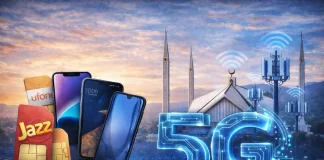

With 5G trials gaining momentum in Pakistan, there is a lot of excitement — but also confusion. Many users are hearing different things about 5G, from extremely fast speeds to concerns about health and costs. In this article, we will break down the most common 5G myths vs reality, especially for Pakistani users, so you can clearly understand what to expect in 2026 and beyond.
As telecom operators like Jazz, Zong, and Ufone begin testing 5G in major cities, it’s important to separate facts from myths. Misinformation can lead to wrong expectations or unnecessary fear.
Understanding 5G Technology in Pakistan
5G is not just a speed upgrade — it is a completely new network architecture designed to handle modern digital needs. The Pakistan Telecommunication Authority (PTA) is currently working on policies and spectrum allocation to support nationwide 5G rollout.
Key features of 5G are:
- Ultra-fast internet speeds
- Low latency (near real-time response)
- Better performance in crowded areas
- Support for smart devices and IoT
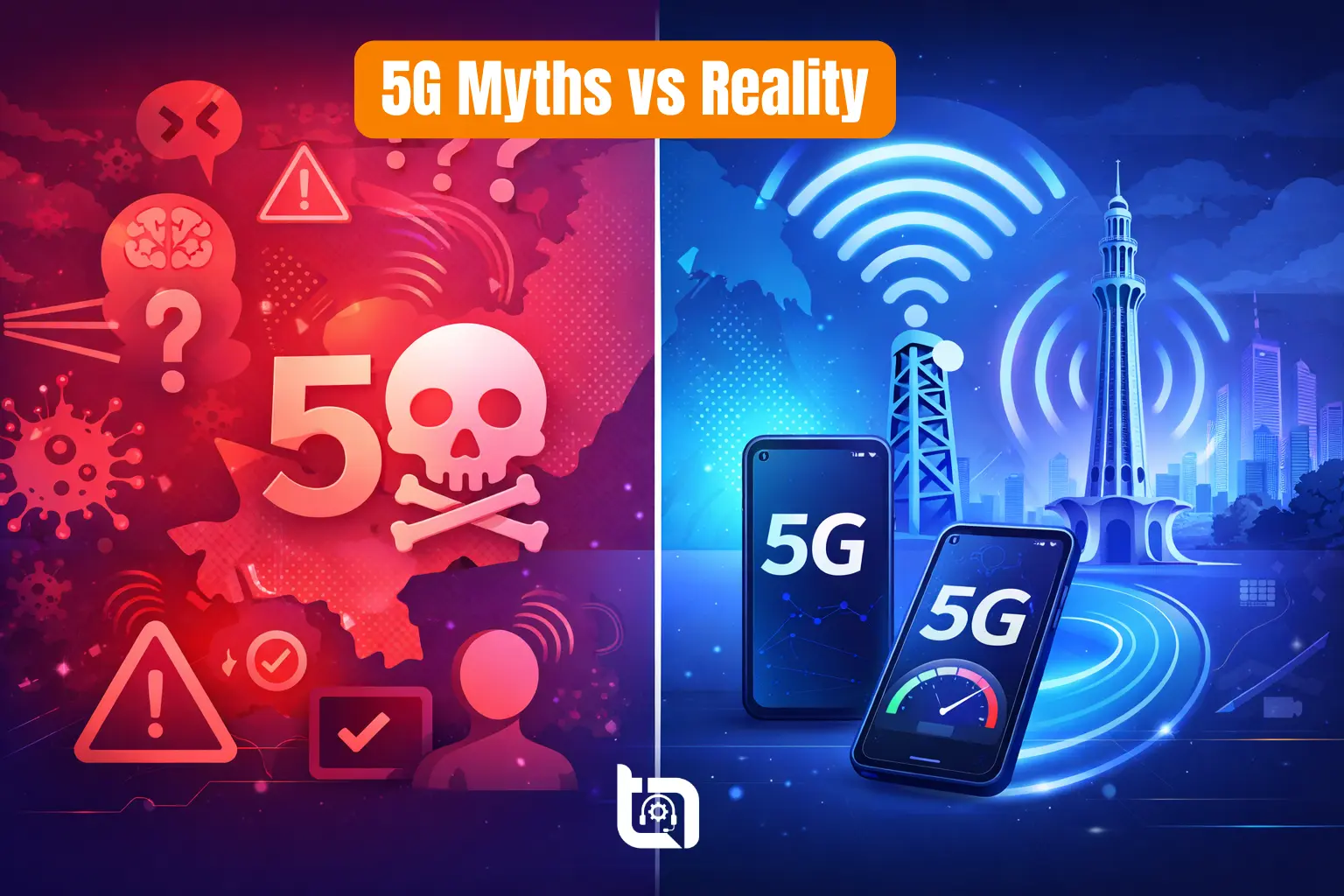
5G Myths vs Reality
New technologies often bring confusion, especially when information spreads quickly on social media. Lack of awareness and viral misinformation onlne leads to confusion amongst common users causing unrealistic expectections to surface. Let us talk about most common 5G myths vs the reality.
Myth 1: 5G Will Be Available Everywhere Immediately
That is not correct as 5G rollout in Pakistan will be gradual, starting from major cities like Islamabad, Karachi, Lahore, Rawalpindi, Multan, and Faisalabad. The facts on ground are:
- Limited 5G coverage in early stages
- Expansion depends on infrastructure and investment
- Rural areas will take longer to get 5G
Myth 2: 5G is Extremely Expensive
Not really; while 5G devices are currently expensive, prices are gradually coming down. It is expected that the data packages might be slightly higher initially but the prices will become more affordable over time. As budget 5G phones are als available in the market, 5G is expected to become as common as 4G in the long run.
Myth 3: 5G Works on All Smartphones
No; as a matter of fact, only 5G-enabled smartphones can access 5G networks. That means the older 4G phones will not support 5G connectivity. Users may need to upgrade devices with software updates (if supported by the manufacturers).
Myth 4: 5G Speeds Will Always Be 1 Gbps
This is the most common misconception circulated through social media. While 5G can reach very high speeds, actual performance depends on multiple factors like network congestion, distance from tower, and device capability.
However, it is expected that users may get an average speed of 100 Mbps – 500 Mbps while it may rise to 1 Gbps in deal conditions only.
Myth 5: 5G is Harmful to Health
This is one of the most common myths even on global pages. But as a matter of fact, no scientific evidence is available proving that 5G is harmful. Contrarily, the 5G technology operates within safe frequency limits and the international health organizations has also approved its usage as safe. Therefore, the technology follows global safety standards, making it safe for everyday use.
Myth 6: 5G Will Replace WiFi Completely
No, certainly not; the 5G and WiFi technologies serve different purposes. While 5G is meant for mobile connectivity, the WiFi is considered better for home and office networks. We can say that both these technologies will coexist serving their purposes.
What Pakistani Users Should Expect from 5G
For everyday users in Pakistan, 5G will bring noticeable improvements. With 5G connectivity, users may enjoy faster download/ upload speeds along with smooth HD/ 4K streaming and better online gaming experience. Once commercially available, improved video calling and remote work would become accessible.
However, its benefits aside, 5G will take time to become fully mature and accessible to everyone. In the initial phases, 5G may face network rollout delays due to infrastructure upgrades keeping its availability to limited cities and areas.
Then question arises should we upgrade to 5G in 2026? Surely yes, consider upgrading if you live in a major city with 5G coverage and you really need faster internet speeds for work or gaming. However, don’t forget to consider the 5G supported handset – the prime source of 5G connectivity.
Conclusion
5G is an exciting development for Pakistan, but it is important to understand the reality behind the hype. While it promises faster speeds and better connectivity, the rollout will take time, and not all claims are true.
By separating myths from facts, users can make better decisions about upgrading devices and choosing networks. As Pakistan moves towards a digital future, 5G will play a key role — but patience and awareness are essential.
Stay informed with the latest 5G updates, telecom news, and tech guides only on Tecno Times Pakistan.