
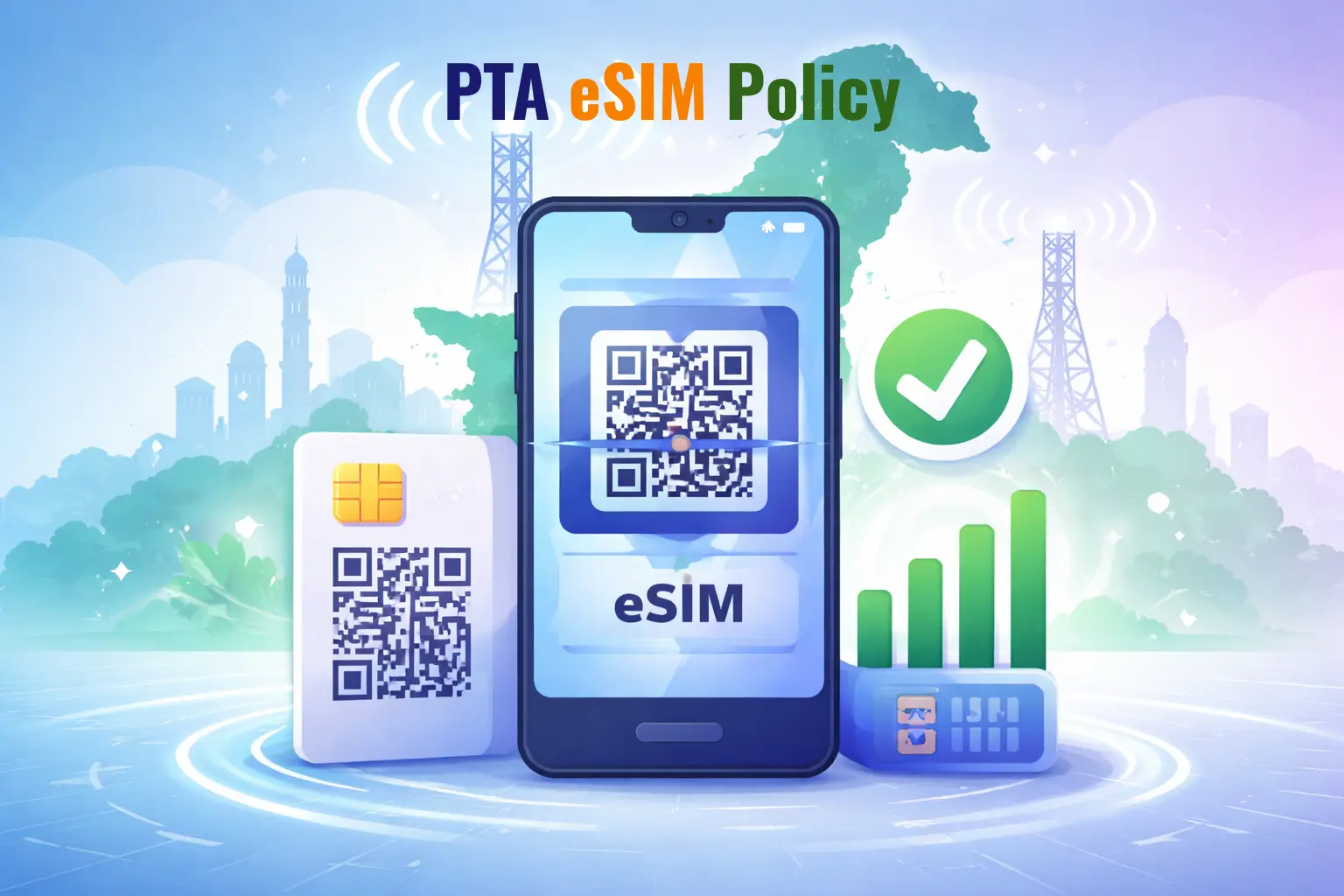
The adoption of eSIM technology is gradually increasing worldwide, and Pakistan is also moving in the same direction. With the rise of modern smartphones, many users now prefer eSIMs due to their convenience and flexibility. However, understanding how eSIM works under PTA regulations is important before switching. In this guide, we’ll explain the PTA eSIM policy in Pakistan, list supported smartphones, and walk you through the complete registration process step-by-step.
What is eSIM and How Does It Work?
An eSIM (embedded SIM) is a digital SIM that allows users to activate a cellular plan without inserting a physical SIM card. Instead of swapping SIMs, you can switch networks directly from your phone settings.
The Pakistan Telecommunication Authority (PTA) has introduced policies to regulate eSIM usage in Pakistan under its Device Identification Registration and Blocking System (DIRBS). This ensures that all devices using eSIM technology are properly registered and compliant with local telecom laws.
The eSIM provides flexibility, better durability, and eliminates the risk of losing a physical SIM card. That is why the eSIM technology is considered useful for:
- Frequent travelers
- Freelancers working internationally
- Users who want multiple numbers on one device
READ ALSO: How to Convert Physical SIM to eSIM in Pakistan: Step-by-Step Guide
PTA eSIM Policy in Pakistan
It is important to note that unregistered eSIM phones will eventually be blocked from network services in Pakistan (just like physical SIM devices). PTA allows eSIM usage in Pakistan with certain conditions:
- The mobile device must be PTA-approved and registered
- eSIM profiles can only be activated through authorized telecom operators
- Users must comply with DIRBS regulations
- Imported phones must be registered before eSIM activation
Supported eSIM Phones in Pakistan
It is important to note that NOT all smartphones support eSIM. Therefore, we have compiled a list the most popular eSIM-supported devices available in Pakistan:
Apple iPhones (eSIM Supported)
Apple devices are among the most reliable for eSIM usage due to strong software optimization and global compatibility. All iPhones from iPhone XS onwards support eSIM, including iPhone XS/ XR, iPhone 11, 12, 13, 14, 15, and newer models.
Samsung eSIM Phones
Samsung offers eSIM support in both flagship and foldable devices including Galaxy S20, S21, S22, S23, S24 series and Galaxy Z Fold & Z Flip series. These phones support dual SIM functionality (physical + eSIM or dual eSIM in newer models).
Google Pixel & Other Brands
Other brands also support eSIM, including Google Pixel (Pixel 3 and above), Huawei (select models), and Oppo & Vivo (limited newer models). However, availability and compatibility may vary depending on PTA approval and telecom support.
How to Register eSIM Device with PTA
Registering an eSIM-enabled device follows the same process as a regular smartphone. Below is the step-by-step method:
Step 1: Check Device IMEI
First, check your device IMEI by dialing *#06#. Be noted that usually the eSIM-enabled devices come with multiple IMEI numbers—note all of them.
Step 2: Visit DIRBS Portal
Go to the official PTA DIRBS website and select “Register Mobile Device” to begin the process.
Step 3: Choose Registration Method
You can register your device using CNIC (local users) or passport (overseas Pakistanis). Enter your details carefully to avoid delays.
Step 4: Enter Device Details
Input all required IMEI numbers correctly. For eSIM phones, ensure both physical and eSIM IMEIs are entered (if applicable).
Step 5: Submit Application & Get PSID
After submission, you will receive a PSID (Payment Slip ID) for tax payment.
Step 6: Pay PTA Tax
Pay the applicable PTA tax using banking apps, ATMs, or mobile wallets. However, tax amount depends on your phone model and category.
Step 7: Activate eSIM via Telecom Operator
Once your device is approved, visit your telecom operator (Jazz, Zong, Ufone) and request for eSIM activation. Scan the QR code provided by the operator and your eSIM will be activated within minutes.
Important Things to Keep in Mind
- Not all telecom operators fully support eSIM on every device
- PTA approval is mandatory before activation
- Always confirm compatibility before purchasing a phone
- Keep your QR code secure after activation
Final Thoughts
eSIM technology is the future of mobile connectivity, and Pakistan is slowly adopting it under PTA regulations. While the process may seem similar to traditional SIM registration, users must ensure their devices are fully compliant before activating eSIM services.
If you’re planning to switch to eSIM, make sure your smartphone supports it and is PTA-approved. With the right setup, you can enjoy a more flexible and modern mobile experience in Pakistan.
Stay updated with the latest tech insights only on Tecno Times Pakistan.