


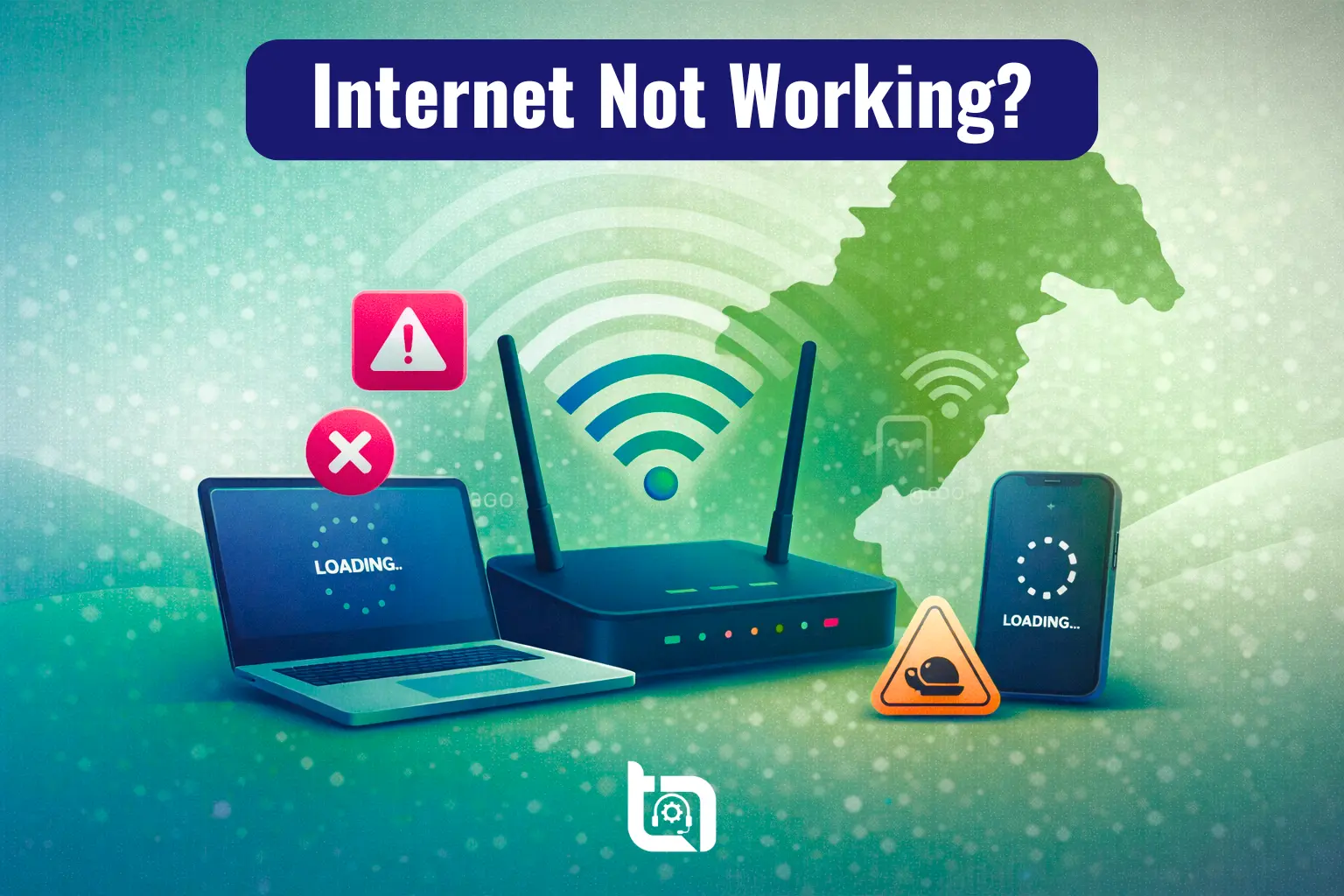
A slow or completely disconnected internet connection can be frustrating—especially when you rely on it for work, online classes, streaming, or gaming. In this guide, we’ll explore the main issue – internet not working categorized with 8 most common ISP problems in Pakistan and quick solutions you can try before contacting customer support.
Many internet users in Pakistan experience sudden connectivity issues with their Internet Service Providers (ISPs), but the good news is that some of these problems have simple fixes.
1. Loose or Damaged Internet Cables
One of the most common causes of internet problems is loose or damaged cables connected to your router or modem. Sometimes a simple cable reconnection restores the internet instantly.
- Check the LAN cable and fiber cable connected to the router.
- Ensure all cables are firmly plugged in.
- Replace any damaged or bent cable.
2. Router Needs Restart
Routers can occasionally freeze or stop responding due to network overload or internal glitches. This simple router reboot fixes many temporary connectivity issues.
- Turn off the router.
- Unplug it from the power source.
- Wait 30–60 seconds.
- Turn it back on.
3. ISP Network Outage
Sometimes the problem isn’t on your end. Your ISP may be experiencing a temporary network outage or maintenance work. If there’s an outage, you’ll usually need to wait until the service is restored.
- Check the ISP’s official website or social media pages.
- Contact customer support to confirm if there’s a network outage in your area.
4. Expired Internet Package
Many users forget to renew their internet package or bill payment, which can result in service suspension. Your internet service typically resumes within minutes after payment.
- Log into your ISP customer portal or mobile app.
- Check billing status or package validity.
- Renew or pay the bill if required.
5. Weak Wi-Fi Signal
If the internet works near the router but not in other rooms, the issue may be weak Wi-Fi coverage.
- Move the router to a central location in your home.
- Keep it away from thick walls, microwaves, or metal objects.
- Consider using a Wi-Fi extender or mesh system for larger homes.
6. Too Many Connected Devices
Multiple devices using the same internet connection can slow down the speed significantly. Just prioritize important devices like laptops or work computers.
- Disconnect unused devices.
- Restart the router to refresh connections.
- Enable QoS (Quality of Service) settings if your router supports it.
7. Incorrect Router Settings
Sometimes incorrect network settings, firmware bugs, or configuration errors can interrupt internet access. Be sure to keep your ISP login credentials before resetting.
- Access your router settings via 192.168.1.1 or 192.168.0.1.
- Check your WAN and PPPoE configuration.
- Update the router’s firmware if available.
- If necessary, perform a factory reset.
8. DNS Issues
DNS problems can make websites fail to load even when the internet connection appears active. You can change DNS settings on your router or device network settings. Try switching to a public DNS:
- Google DNS → 8.8.8.8 / 8.8.4.4
- Cloudflare DNS → 1.1.1.1
When Should You Contact Your ISP?
If you’ve tried all the above fixes and the internet is still not working, it may be time to contact your ISP. As the issue like the following can only be resolved by your internet provider’s technical team:
- Fiber line damage
- Signal loss from the main network
- Account configuration problems
- Router hardware failure
Final Thoughts
Internet connectivity problems are common in Pakistan, but many of them can be solved with simple troubleshooting steps. Restarting your router, checking cables, or adjusting settings often restores the connection quickly. Before calling technical support, try these quick fixes to save time and get back online faster.
Stay updated with Tecno Times Pakistan for more tips & tricks and tutorials making your daily life more easy.